Resources · Plastics recycling
How to prepare a recycling line for your plastics.
Films, rigid parts, production offcuts and used packaging present different requirements. PE, PP, PET and other polymers need to be assessed against the available material and intended use. Prepare your recycling project with requirements that connect feed, process and output quality.
Connect your material to your product
An approach to defining projects for different plastic families; process operations are selected after assessing the stream.
Identify
Polymers, origins, physical form and batch variations.
Specify
Target product and its user's acceptance criteria.
Prepare
Required operations and equipment interfaces.
Assess
Comparable quotations and trials with identified material.
Track
Quality checks, batch records and maintenance requirements.
Define the material family and target product
Identify known polymers and possible mixtures, post-industrial or post-consumer origin, and physical form: film, parts, bottles, fibres or material already size-reduced. Do not combine supplies needing different preparation under one description. If composition is uncertain, state that uncertainty from the first supplier enquiry.
Describe the product you want to sell or reuse: regrind, flakes, pellets or another form. Ask the intended user for acceptance criteria and how they will check them. The objective is not simply to recycle a material, but to prepare an output compatible with an identified use.
Describe variations and unwanted materials
Photograph several batches and record observed moisture, dirt, labels, metals and other materials. Separate measurements from estimates. For films or bulky parts, also describe how the material arrives and how it can feed the equipment consistently; physical form matters alongside the available weight.
Ask which unwanted materials the proposal addresses, which must be removed upstream and which require a trial. Do not assume that one separation operation covers every mixture. Trials need identified batches reflecting expected variations, so a result obtained with particularly favourable material is not applied to the entire supply without evidence.
Choose useful stages rather than a universal line
Mechanical preparation may combine sorting, size reduction, washing, separation and drying. Their inclusion, sequence and sizing depend on the stream and target product. Clean production offcuts and used packaging do not automatically justify the same route. Ask for the purpose of every stage in the proposed process.
Where the project includes extrusion or pelletising, connect that stage's requirements to the material prepared upstream. Establish what needs to arrive at its inlet and what will be checked at its outlet. Adding a machine does not remove the need to verify that feeding, ancillary systems and the rest of the equipment can operate together.
Check quality at defined points
Place checks where they will support decisions: reception, after preparation and on the product supplied to the customer. For each check, define the target characteristic, chosen method and responsible person. Purity, moisture, size or appearance requirements need to reflect the intended use rather than a generic list.
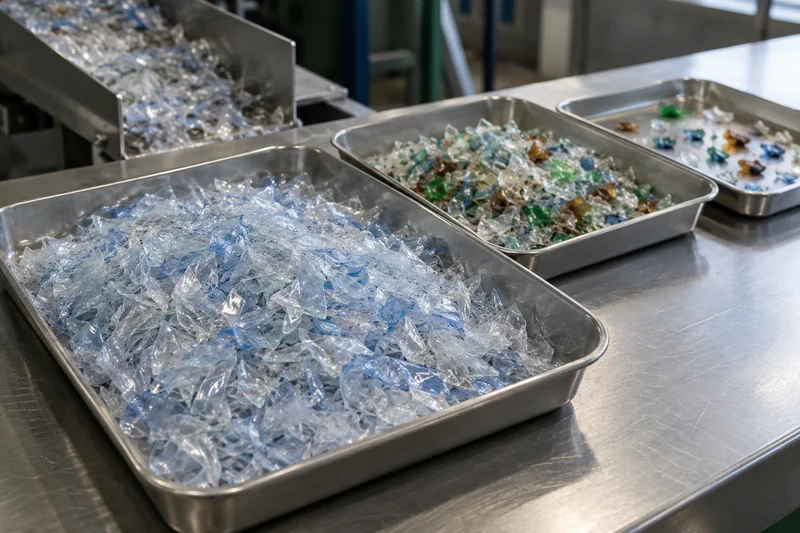
Retain the link between incoming batch, process observations and resulting product. These records help investigate inconsistent quality. AMMARIX's PET washing and sorting projects show work on that polymer; they illustrate an approach to process assessment without replacing the study required for your own plastic stream.
Check interfaces and site resources
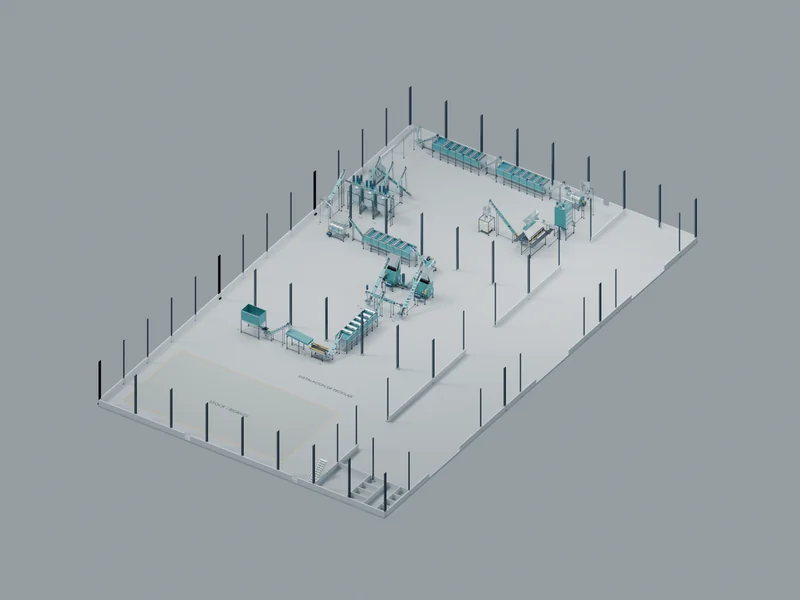
Mark transfers, intermediate storage and cleaning access on the line drawing. Ask for each machine's required feed conditions. Compare capacities on a common basis: material, physical form, operating conditions and output criteria. The measurement points need to match across the quotations being assessed.
For a project in Algeria, establish the available electrical supply, handling equipment and water where the process requires it. Ask which water circuits, rejects and consumables are included in the proposal. Also identify wear parts, supply lead times and the work that can be carried out on site.
Prepare quotations and trials that can be assessed
Give suppliers the same material description and objectives. Request their assumptions, exclusions and proposed trial conditions. A conditional answer must remain conditional in the comparison; placing it in a table does not turn it into a commitment or establish that the condition has been met.
Before deciding, agree on batches, quantities needed for trials and observations to be recorded. Keep results with the tested configuration. AMMARIX can help structure requirements, compare proposals and prepare interfaces. An initial discussion can start with photographs, a target product and the current situation of your installation.
What needs to be clear in every quotation
Keep material and product conditions consistent when comparing responses.
| Topic | Your starting information | The answer you need |
|---|---|---|
| Material | Polymer, origin and physical form | Assessed stream and proposal limitations |
| Unwanted materials | Observed types and variations | Proposed treatment and upstream preparation |
| Product | Format and intended use criteria | Checks and acceptance conditions |
| Line | Existing equipment and resources | Interfaces, ancillary systems and exclusions |
| Trials | Available batches and objectives | Method, configuration and recorded data |
Your starting dossier
- Plastic families, origins and photographs from several batches.
- Target product form and the intended user's criteria.
- The problem to solve or capacity to assess, with its conditions.
- Existing installation drawings and available resources.
- Quotations, trials or observations already available.